
Public Speaking Coaching With Video Feedback: Why It’s the Fastest Way to Improve
Sep 21, 2026
The best public speaking coaching programs include video feedback: you present, watch the recording with a coach, and fix specific habits on the next take. Video shows you what your audience sees, which rarely matches what you feel in the moment. That’s why public speaking coaching with video feedback produces faster, longer-lasting improvement than advice alone.
I learned this firsthand. In broadcast news, reviewing your own tape is part of the job, and the first time I watched myself, I wanted to look away. That habit of watching, adjusting, and trying again is what turned my nerves into skill.
Why Video Feedback Speeds Up Public Speaking Coaching
Most people misjudge their own speaking. A study of more than 600 public speaking students, published in the Basic Communication Course Annual, found that speakers often overestimate their performance, and reviewing video improved the accuracy of their self-assessments.
The broader research points the same direction. A meta-analysis of 12 published studies found that video feedback led to better speech content and stronger skill gains, with no significant increase in speaking anxiety.
Footage alone isn’t the whole answer, though. A coach turns what you see into a short, specific plan, so each take gets measurably better than the last.
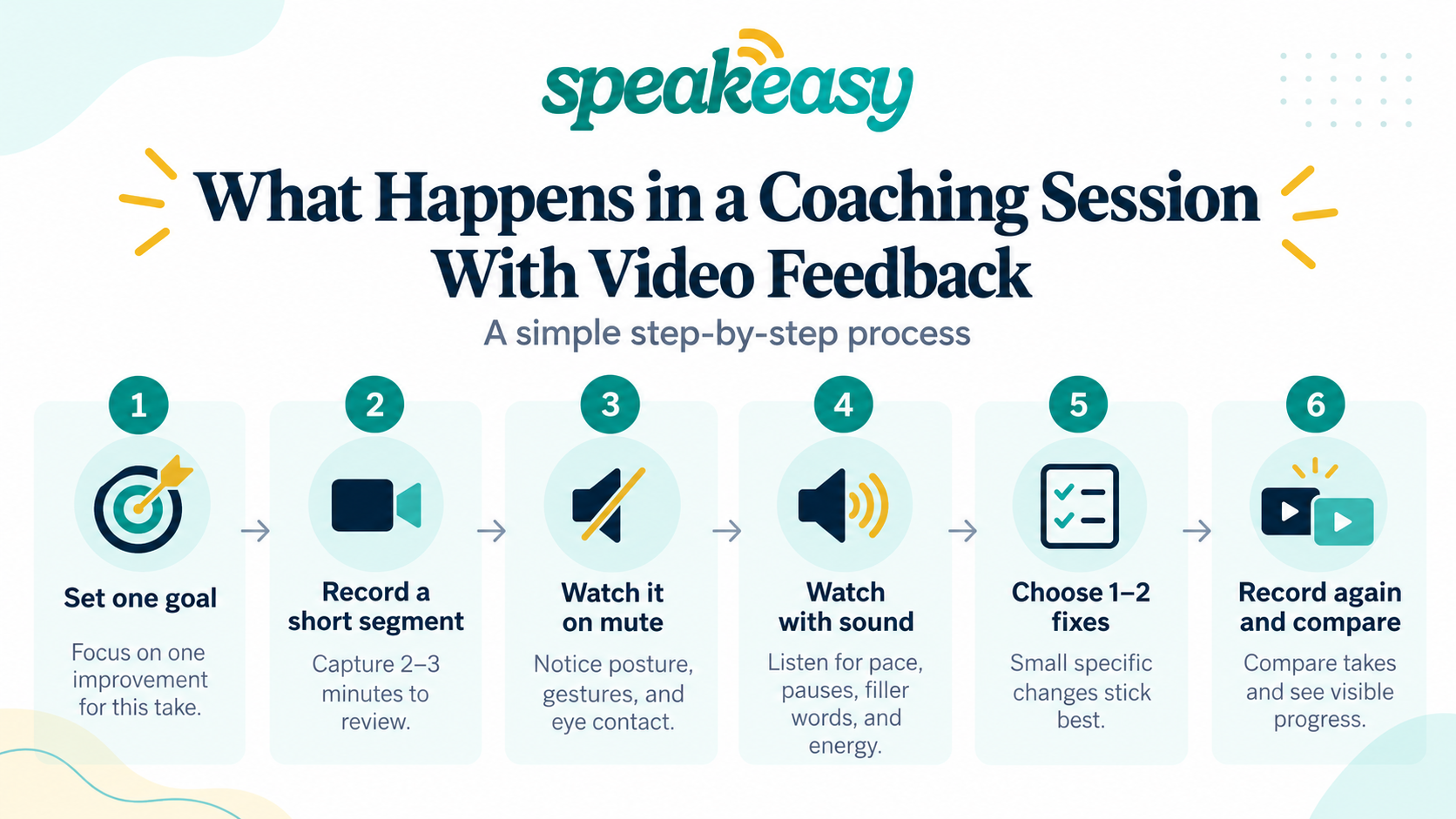
What Happens in a Coaching Session With Video Feedback
Here’s how a video review session works, step by step.
- Set one goal for the take. Maybe it’s a stronger opening, or slowing down through your key point.
- Record a short segment. Two to three minutes gives you plenty to work with.
- Watch it once with the sound off. You’ll see posture, gestures, and eye contact without your words distracting you.
- Watch it again with sound. Now you can focus on pace, pauses, filler words, and vocal energy.
- Pick one or two fixes. Small, specific changes stick better than a long list.
- Record again and compare. Seeing the second take beside the first builds real, visible confidence.
What Your Video Reveals That You Can’t Feel
The camera catches things you’ll never notice from the inside. Here’s what a presentation coaching video review usually surfaces:
- Filler words like “um,” “so,” and “you know” that slip in when you search for the next thought.
- Pace that feels steady to you but sounds rushed to your audience.
- Eye contact that drifts to your notes or slides at key moments.
- Energy that feels big in the room but reads flat on camera.
- Your strongest moments, which you can identify and repeat on purpose.
That last point matters most. Video feedback isn’t only about catching mistakes. It shows you what’s already working, so you can build on it.
How Does Coaching With Video Feedback Compare to AI Speech Apps?
AI speech apps count filler words, track your pace, and flag long pauses. They’re a useful tool for extra practice between sessions.
A coach adds what an app can’t: judgment. A coach explains why a moment landed or didn’t, connects your delivery to your audience and goal, and helps you build confidence along the way.
The best approach uses both. Practice with an app on your own time, then bring your footage to a coach who can turn the data into real progress.
What Should I Look For in a Public Speaking Coaching Program With Video Feedback?
Not every program uses video the same way. Look for these five signs of quality on-camera coaching:
- The coach watches with you. Sending you a recording to review alone misses half the value.
- The coach understands the camera. Lighting, framing, and lens position all shape how you come across.
- Feedback stays focused. One or two fixes per take beats a page of notes.
- Practice matches your real moments. Rehearse in the formats you actually face, whether that’s a video call, a stage, or an interview.
- You keep your recordings. Watching your first and latest takes side by side shows how far you’ve come.
If you’re a senior leader comparing coaches, I also break down what executives should look for in a public speaking coach.
Video Feedback Matters More When Your Audience Is on Camera
Job interviews, team meetings, client calls, and leadership updates now happen on video every day. Your audience sees you through a lens, so practicing through a lens is the most direct preparation you can get.
Broadcast journalists build this skill through constant review. You can build it the same way, on a much shorter timeline, with the right coach beside you.
How Speakeasy Uses Video Feedback in Coaching
My background spans nearly two decades of live television and professional video production. I know how lighting, framing, and the lens shape the way people perceive you, and I bring that eye to every session.
Video review is built into my 1:1 communication coaching, so every session ends with footage that shows your progress. (Links to: 1:1 Coaching page)
Start Public Speaking Coaching With Video Feedback
Watching yourself on video feels uncomfortable for about one session. After that, public speaking coaching with video feedback becomes the fastest feedback you’ll ever get, and the confidence you build is real because you can see it.
Book your free 15-minute Discovery Call, and we’ll find the one or two changes that will make the biggest difference in how you come across.
Frequently Asked Questions About Public Speaking Coaching With Video Feedback
What public speaking coaching programs include video feedback?
The strongest public speaking coaching programs include video feedback as a core part of every session. Look for a coach who records your practice, reviews the footage with you, and gives one or two specific fixes before your next take. Coaches with broadcast or on-camera experience bring extra insight into how you come across on screen.
How does video feedback improve public speaking?
Video feedback improves public speaking by showing you exactly what your audience sees. It reveals habits like filler words, rushed pacing, and wandering eye contact that you can’t feel in the moment. Research shows video review also helps speakers judge their own performance more accurately.
Is it normal to dislike watching yourself on video?
Yes, almost everyone dislikes watching themselves on video at first. The discomfort fades quickly once you start focusing on specific skills instead of your overall impression. Most people feel more comfortable by their second or third review session.
How often should I record myself practicing a presentation?
Record yourself at least twice for any important presentation: once early to spot habits, and once after making changes. For ongoing growth, a short weekly recording builds steady progress. Keep your clips so you can compare them over time.
Can video feedback help with on-camera job interviews?
Yes, video feedback is one of the best ways to prepare for on-camera job interviews. Practicing on camera shows you how your answers, eye contact, and energy come across through a screen. You can fix framing, lighting, and pacing before the interview that counts.
Are AI speech coaching apps as good as a human coach?
AI speech coaching apps work well for tracking filler words and pace, but they can’t replace a human coach’s judgment. A coach explains why something works, connects your delivery to your goals, and helps you build confidence. Many people get the best results by using an app for practice and a coach for direction.
What should I focus on when I watch my presentation recording?
Focus on one or two things at a time when you watch your presentation recording. Watch once with the sound off for body language, then again with sound for pace, pauses, and filler words. Note your strongest moments too, so you can repeat them on purpose.
Want to Learn More About Public Speaking Coaching With Video Feedback?
What Is Video Feedback in Public Speaking?
Video feedback in public speaking means recording a speaker’s practice and reviewing the footage to improve delivery. A coach or the speaker identifies strengths and habits to adjust. The speaker then records again to measure progress.
What Is Video Self-Modeling?
Video self-modeling is a technique where you watch clips of your own best performances. Seeing yourself succeed reinforces the behaviors you want to repeat. Coaches often use it to build confidence before a big presentation.
What Is an Air Check?
An air check is broadcast industry shorthand for a recording of an on-air performance that talent reviews for critique. News anchors and reporters use air checks to sharpen their delivery over time. The same method works for anyone who speaks on camera or on stage.
What Does a Public Speaking Coach Do?
A public speaking coach helps people communicate with more clarity, confidence, and impact. Coaches work on structure, delivery, voice, body language, and managing nerves. Many also prepare clients for specific moments, like interviews, keynotes, or leadership meetings.