
Media Training vs. Presentation Skills Training: Which Does Your Team Actually Need?
Sep 07, 2026
Media training prepares you for the moments you don’t control: a reporter’s interview, a live broadcast, a podcast host’s follow-up question. Presentation skills training prepares you for the moments you do control: a keynote, a board update, a team meeting. That’s the core difference in media training vs presentation skills training, and most leaders end up needing both.
The real question is which one your team needs first. I spent nearly two decades in live broadcast television, and today I train leaders and organizations in both disciplines. Here’s how I help them decide.
Media Training vs. Presentation Skills Training Comes Down to Control
In a presentation, you own the agenda. You choose the story, the order, the slides, and the close.
In a media interview, someone else owns the agenda. The reporter picks the questions, the editor picks the clip, and the audience sees only what makes the final cut.
That single difference shapes everything each training teaches. Presentation skills training builds command of a room. Media training builds command of a message, even when the conversation goes somewhere you didn’t plan.
The Side-by-Side Breakdown
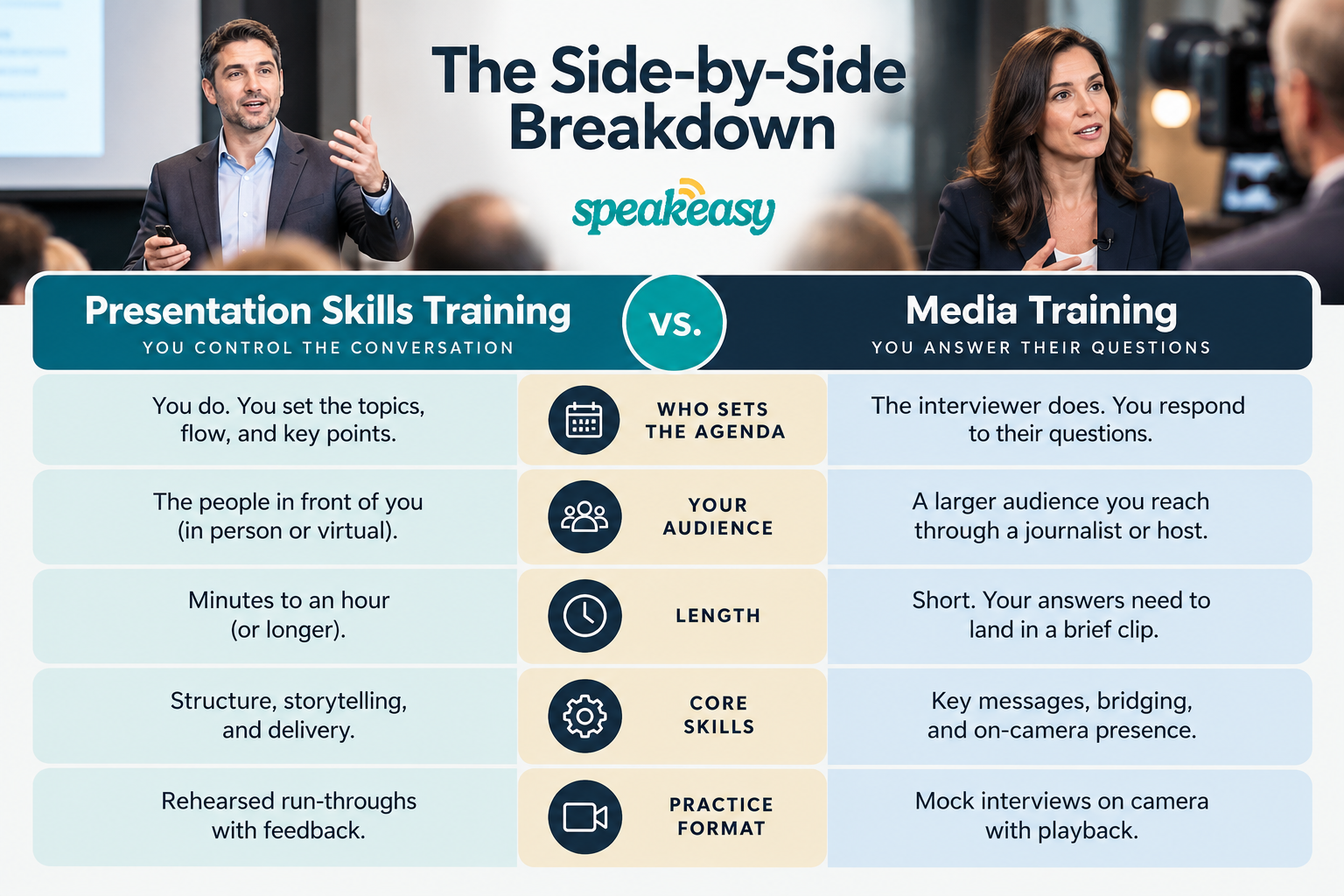
- Who sets the agenda: You do in a presentation. The interviewer does in a media interview.
- Your audience: The people in front of you, versus a larger audience you reach through a journalist or host.
- Length: Presentations run from minutes to an hour. Media answers need to land in a short clip.
- Core skills: Structure, storytelling, and delivery, versus key messages, bridging, and on-camera presence.
- Practice format: Rehearsed run-throughs with feedback, versus mock interviews on camera with playback.
Presentation Skills Training Builds Command of the Room
Presentation skills training teaches you to organize ideas so an audience can follow them and remember them. Think strong openings, clear structure, and a close that tells people what to do next.
It also covers the physical side: voice, pace, eye contact, and movement. Good training treats your slides as support, not as the script.
This is the right fit for leaders who give keynotes, run all-hands meetings, pitch investors, or present to a board. Read more on our Public Speaking and Keynotes services.
Executive Media Training Builds Command of the Message
Executive media training teaches you to deliver your message through someone else’s story. You build two or three key messages before the interview, then return to them no matter where the questions go.
The core techniques include bridging from a tough question back to your message, speaking in short quotable answers that survive the edit, and staying calm and credible on camera. Many programs also include grounding in crisis communication, so your spokespeople respond with clarity when news breaks fast.
During my years conducting live interviews, I could usually tell within one answer whether a guest had a clear message. The prepared guests made the conversation easy and walked away with the story they came to tell.
How Does Media Training Compare to Public Speaking Coaching?
Public speaking coaching focuses on you and your audience. It builds confidence, delivery, and presence for speeches, meetings, and presentations.
Media training adds a third party to the equation: the interviewer. That changes the skill set, because you now manage questions, editing, and a much larger audience you can’t see.
The two share a foundation. Clear thinking, a steady voice, and authentic presence carry over in both directions, so leaders who train in one tend to progress faster in the other.
The Camera Is Blurring the Line Between Both
A decade ago, presentation skills lived on a stage and media skills lived in a TV studio. Today, both live on camera.
Board meetings happen on video calls. Podcasts, webinars, and LinkedIn videos put leaders on camera every week. Even hiring runs through a lens: Indeed reports that 82% of hiring managers use virtual interviews somewhere in their process.
When a camera sits between you and your audience, presentation skills and media skills merge. Your team needs to structure a message like a presenter and deliver it like a broadcaster.
Which Training Does Your Team Actually Need?
Start with the moments already on your calendar. Here’s the framework I use with clients.
- Choose presentation skills training first if your leaders mainly speak to internal teams, boards, clients, or conference audiences.
- Choose media training first if your organization has press interviews, a product launch, a public announcement, or community attention on the horizon.
- Choose both if your leaders represent the organization publicly and also lead from the front internally. Most executives fall here.
- Add on-camera coaching if your team shows up on video calls, podcasts, or social video every week.
For organizations, the investment case is simple. Preparation costs far less than repair, and it builds trust every time your team speaks.
Why I Train Both Under One Roof
Most providers specialize in one lane. A presentation coach may never have worked in a newsroom, and a media trainer may never have coached a team meeting or a keynote.
Speakeasy covers both, along with video production and spokesperson services. Before I recommend anything, I ask how your team tells its story today, then rank your needs as high, medium, or low. That way, your training budget goes to the skills that make the biggest difference first.
Find the Right Mix of Media Training vs. Presentation Skills Training
Media training vs presentation skills training isn’t an either-or decision for most leaders. It’s a question of sequence, and the right sequence starts with the moments your team faces next.
Book your free 15-minute Discovery Call, and we’ll map out exactly where your team should start.
Frequently Asked Questions About Media Training vs. Presentation Skills Training
What is the difference between media training and presentation skills training?
Media training prepares you for interviews and press moments where a reporter or host controls the questions. Presentation skills training prepares you to deliver a planned message to an audience you can see. The difference comes down to control, and most leaders benefit from both.
How do media training services compare to public speaking coaching?
Public speaking coaching builds confidence and delivery for speeches and presentations. Media training services add interview skills like key messages, bridging, and quotable answers for press, podcasts, and live broadcasts. Both share a foundation of clear thinking and strong presence.
Who needs media training?
Executives, spokespeople, founders, and nonprofit leaders who speak publicly for their organization need media training. That includes anyone facing press interviews, podcast appearances, panel discussions, or public announcements. Any leader who represents the brand in public benefits from preparing before the moment arrives.
Does my team need media training if we rarely talk to reporters?
Yes, if your team shows up on podcasts, webinars, video calls, or social video. Media training builds message discipline and on-camera presence, and those skills apply anywhere a camera sits between you and your audience. Teams with no public-facing moments can start with presentation skills training instead.
What happens during a media training session?
A media training session includes message development, mock interviews on camera, and playback with direct feedback. You practice answering tough questions, bridging back to your key messages, and giving short answers that hold up in an edit. Each round builds on the last until your message lands with confidence.
Can one coach handle both media training and presentation skills training?
Yes, a coach with broadcast and stage experience can handle both media training and presentation skills training. Working with one coach keeps your messaging consistent across interviews, keynotes, and internal meetings. It also lets the coach sequence the training around your team’s real calendar.
Is media training worth it for a small business or nonprofit?
Media training is worth it for any small business or nonprofit that relies on public trust, donors, or local press. The founder or executive director often serves as the face of the organization, so one strong interview can drive real visibility. Focused training helps that leader make every public moment count.
Want to Learn More About Media Training vs. Presentation Skills Training?
What Is Media Training?
Media training is coaching that prepares leaders and spokespeople to communicate through the press and other media. It covers key message development, interview techniques, on-camera delivery, and crisis readiness. The goal is a clear, credible message no matter how the interview unfolds.
What Is Presentation Skills Training?
Presentation skills training teaches people to plan and deliver a message to a live or virtual audience. It covers structure, storytelling, voice, body language, and audience engagement. Leaders use it for keynotes, pitches, board meetings, and team updates.
What Is Bridging in a Media Interview?
Bridging is a technique that moves an answer from the reporter’s question back to your key message. A simple bridge acknowledges the question, then transitions with a phrase like “what matters most here is.” Done well, bridging sounds natural rather than evasive.
What Does a Spokesperson Do?
A spokesperson speaks on behalf of an organization to the media, stakeholders, and the public. Strong spokespeople stay on message, answer questions with clarity, and represent the brand with confidence. Many organizations train several spokespeople so someone is always ready.