
Media Training for Crisis Communication: What to Look for in a Crisis-Ready Coach
Aug 11, 2026
Crisis communication media training helps a spokesperson to remain focused, calm, and precise even while a journalist attempts to catch them by surprise. Therefore, the spokesperson is generally trained to respond to a friendly journalist rather than an unyielding one. A bona fide crisis communication program uses actual simulation-based quasi-interviews, message bridging exercises done with a lot of stress, and an established crisis management strategy rather than usual presentation training with a new name.
Every organization has its own occasion when a camera gets turned toward one of its leaders, and the questions are less than welcoming. It can be a product recall or a workplace event, a data breach or a lawsuit, a sudden resignation.
The trigger changes, but the pressure remains the same. Regular media training contributes to a sense of security that comes from making scheduled statements and presenting at prearranged interviews. Crisis communication training, however, provides knowledge about something much narrower and difficult to grasp: how to protect the integrity of an organization's message at a time when there are attempts to discover a weakness in it.
Not every media trainer is capable of providing this knowledge, even if the program description suggests otherwise. Hence, it is advisable to know the aspects that distinguish crisis-specific courses from regular ones and realize what a coach who is familiar with crisis communication must cover.
Why Crisis Communication Demands a Different Kind of Media Training
In conventional media interviews, the spokesperson wields most (if not all) of the power. The topic has been established beforehand, the questions have been expected, and both parties contribute to the event being successful as desired.
A crisis media interview, however, has a different agenda. The journalist, more than ever, is looking for contradictions: on both sides emotions run high, and the price for failure exceeds even legal consequences or emerging trust issues.
The traditional training does not change, as it usually covers the topics of soundbites creation and managing one’s performance. However, the crisis media training has to introduce some extra layers of knowledge, including legal port and restrictions, as well as the discipline to answer the tricky questions without sounding undecided or uncertain.
What a Crisis-Ready Media Coach Actually Teaches
A strong crisis communication program involves message bridging under duress, implying that one must transition from a complex question to one's carefully crafted message, all without appearing evasive. The program also provides practical solutions regarding how to avoid the “no comment” trap, at the same time allowing one to acknowledge the question while avoiding disclosure of problematic elements (such as legal clearance) through brief and noncommittal holding statements.
The ability to read a room on camera, assess one's body language, gait, facial expressions, and other such nonverbal cues that affect the perception of one’s calmness and professionalism, is also part of good coaching.
Another aspect of quality training involves ensuring good communication with legal and PR teams so that it becomes clear to the spokesperson what kind of information can be disclosed and which must not be disclosed.
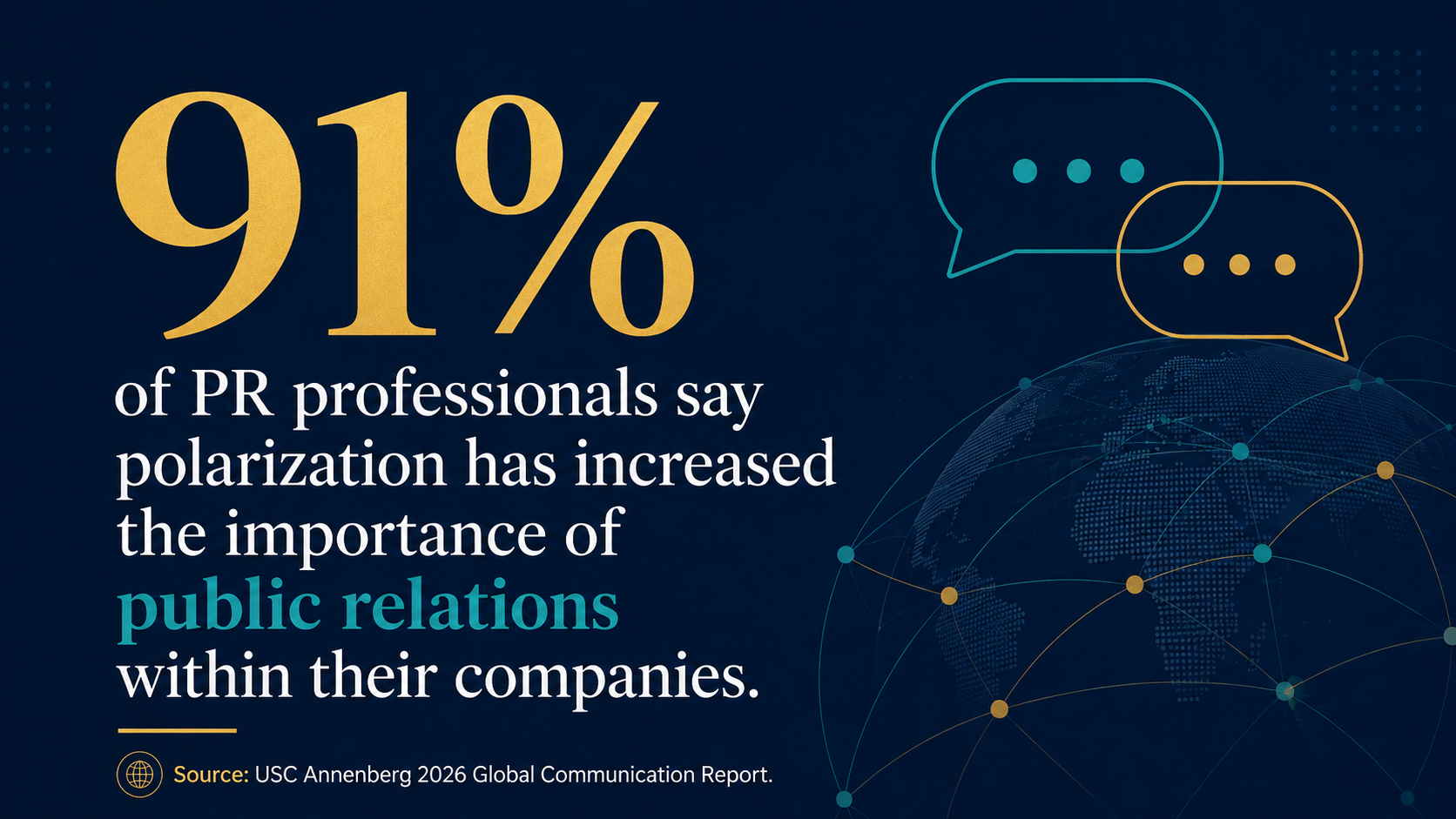
Crisis communication is becoming more important inside organizations, not less. USC Annenberg’s 2026 Global Communication Report found that 91% of PR professionals say polarization has increased the importance of public relations within their companies, while communicators also expect investment in crisis communication to rise over the next five years.
Warning Signs a Program Isn't Truly Crisis-Ready
There are some indicators that point out to programs that claim to be based on crisis communication without the actual need. Signs to look for are:
- Exercises where questions have been either issued or approved by the clients so nothing occurs unexpectedly.
- Absence of unscripted follow-up queries so that the mock interviewing ends when the first reply is given.
- Guidance that includes on-camera readiness but not the elements of communication strategy or legal aspects, and training that is unlinked to any crisis communication plan.
What to Look for When Choosing a Crisis Communication Coach
After understanding what quality crisis training entails, it is easy to determine the best coach. One should look for real-life evidence rather than theoretical examples, with trainers coming from journalism, as they know how to pose the toughest "pressure" questions.
It is important to have recorded sessions as one learns more from watching oneself than from verbal feedback. Good training should cover as many different cases as possible – legal hurdles, safety at workplaces, payments, attacks on reputation, and so on – regardless of whether it applies to the CEO or not, as the right communicator is not always the highest rank.
Common Mistakes Untrained Spokespeople Make Under Pressure
Even the most experienced executive speaker might suffer the pressure of the camera for the first time. The pattern of mistakes in crisis interviews is similar most of the time:
- A complex answer is produced to fill in silence even when the provided information has not undergone legal review.
- The reporter's tone is matched, creating a defensive impression, which leads to the impression of guilt.
- There is speculation concerning the causes of the event which generates information that the company has to retract later; and reading notes during the live interview.
In such cases, the credibility is far more affected than any minor mistake of the speaker.
None of those mistakes is connected to anybody’s malicious intention. All of them stemmed from the lack of experience in real practice, and this is precisely what crisis media coaching is meant for.
How Crisis Training Fits Alongside Public Speaking and Executive Coaching
Training in the context of crisis communication is not intended to serve as a substitute for general training in communication, but rather as an adjunct to it. While effective communication specialists are capable of going before an audience without much of a hitch, a business leader who is often in front of the media must practice very different techniques in which they will need greater control over their communication.
In the same vein, someone who has learned how to deal with media representatives during difficult interviews may not be able to conduct a successful presentation in public since they may not possess any public speaking skills. Nonetheless, organizations that make investments into both styles of training usually notice that their employees are more flexible when it comes to applying their expertise in different communication situations.
Pair Training with a Documented Crisis Communication Plan
Media training performs best when it sits inside a broader plan rather than standing alone. The Federal Emergency Management Agency's Ready.gov crisis communications guidance outlines how businesses should identify audiences, pre-approve message templates, and assign who speaks to whom before an incident occurs.
The Public Relations Society of America's guidance on the first hour of a crisis adds a useful layer on top of that: the earliest decisions an organization makes often shape how the entire story unfolds. A trained spokesperson without a plan behind them is still improvising; a plan without a trained spokesperson to deliver it is just a document.
When to Book Crisis-Specific Media Training
It is a good idea to reserve accommodations if a product is about to be launched or an event is anticipated to be significant before an incident takes place to garner attention from the media, and before one ends up getting involved in court proceedings, investigations, or public disagreements. It is also advisable to reserve accommodations when a new executive is taking up a role that puts them in the public eye for the first time, and thereafter every year for spokespeople.
Prepare with Speakeasy
A confident spokesperson under normal conditions can still freeze under real pressure without the right preparation. The Speakeasy Academy builds media training services around realistic, unscripted mock interviews and video-based feedback, so your team practices the moment before they're actually in it.
Ready to prepare your spokespeople before a crisis picks the timing for you? Book a discovery call with our team today.
Frequently Asked Questions about Crisis Communication
What's the difference between general and crisis media training?
General media training focuses on delivering planned messages clearly in scheduled interviews. Crisis training adds message bridging under hostile, unscripted questioning and the composure to stay accurate under pressure.
How often should executives refresh crisis media training?
Once a year is a reasonable baseline, with an added refresher whenever a new type of risk introduces scenarios the team hasn't practiced before.
Can a PR team handle a crisis without spokesperson training?
Writing a strong statement and delivering it composed on camera are different skills. Untrained spokespeople often undercut good messaging with body language that reads as evasive.
What belongs in a basic crisis communication plan?
At minimum: likely audiences, pre-drafted message templates, a clear chain of who is authorized to speak, and a review process to keep messaging consistent as new information comes in.